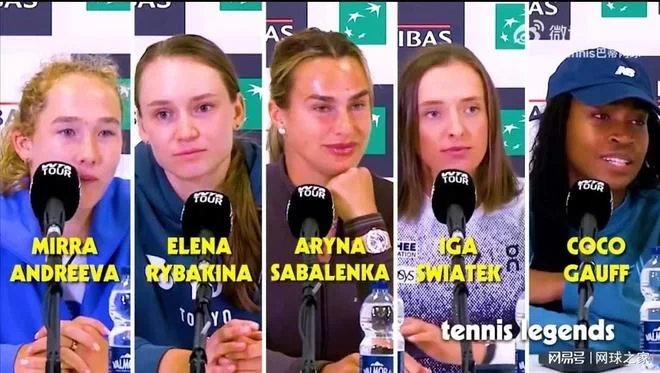

Recently, a group of top tennis players including Aryna Sabalenka, Coco Gauff, Zheng Qinwen, Elena Rybakina, and Jannik Sinner signed a statement expressing disappointment over the 2026 French Open prize money distribution. According to reports, the players’ share of tournament revenue at Roland Garros has dropped from 15.5% in 2024 to approximately 14.9% this year. The players are demanding at least a 22% share to ensure fairness. 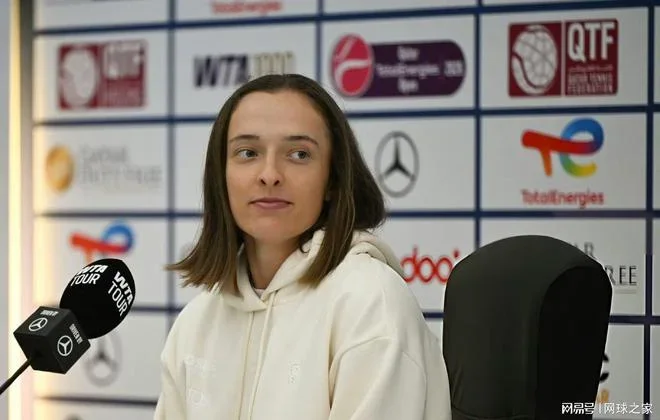
During press conferences at the Rome Masters, many elite players were questioned about this issue. Sabalenka led the criticism, with Gauff, Rybakina, and Jasmine Paolini following suit. The phrase “boycott the Grand Slams” quickly became the week’s hottest topic. Paolini even stated bluntly: “If we all agree—and I think we do—then we could consider a boycott.”
The revolutionary fervor might make one think players are preparing to emulate the 1973 ATP strike at Wimbledon. 
However, not everyone agrees. Iga Swiatek, known for her calm demeanor—and perhaps rare clarity—expressed a more measured view. She said: “I think our proposal for a fair share of revenue is reasonable. It’s not about increasing prize money; it’s that the percentage of revenue has actually decreased. The most important thing is to have good communication with the organizations, constructive dialogue, and enough space for discussion and negotiation. Hopefully, before the French Open, we can have such meetings, and then we’ll see.”
She emphasized: “Boycotting a tournament would still be quite extreme. I don’t know if that’s really feasible. We are individual competitors, so it’s hard to imagine how that would work.”
I strongly agree with Swiatek. Tennis is an individual sport without a players’ union like in soccer or basketball. Getting 128 independent contractors to simultaneously forgo their biggest source of annual income? That’s harder than winning seven matches in a row at Wimbledon.
Swiatek highlighted the core issue: “Prize money increase is not what we’re really after, because the percentage of revenue has actually dropped. The key is good communication and constructive discussions with the organizations.”
In other words, don’t just focus on the money—first look at how much the tournaments earn and how little the players get.
It’s undeniable that the revenue generated by Grand Slams is disproportionately allocated to players. Paolini also stressed this point. But here’s a harsh reality: for players ranked outside the top 50, first-round Grand Slam prize money may be their most important income for the entire year. A boycott might mean Sabalenka only buys one fewer beachfront apartment in Miami, while lower-ranked players struggling between Challengers and Tour events could lose the ability to afford a coach.
So let me be bold: instead of boycotting Grand Slams, players should aim their fire at the real problem—the two-week format for 1000-level tournaments.
Admittedly, I rarely express such clear opinions in my articles, partly to avoid controversy and partly out of professional restraint. But this time, I believe boycotting Grand Slams is highly irrational.
The two-week format is what players should truly resist, as it’s the biggest scam orchestrated by the WTA and ATP. Events like Madrid, Rome, Indian Wells, and Miami have been artificially extended from one week to two. The official line: “more rest for players” and “enhanced event experience.” Nonsense. The real reason: selling more tickets, more broadcast rights, more merchandise, and more VIP boxes.
It’s all about maximizing profit.
And what about the players? The mandatory tournament rules—which Swiatek mentioned as part of the problem—force top players to compete. If they reach the final in Madrid, they spend two weeks there, then fly directly to Rome for another two weeks, followed immediately by the French Open. That’s not playing tennis; that’s risking their bodies.
Paolini mentioned players fighting for retirement benefits and maternity leave. But the two-week format increases physical burden and injury risk for female players, directly contradicting those basic protections.
For lower-ranked players, the situation is even more absurd: an early-round exit leaves them with nearly two weeks of “downtime.” They can’t play other tournaments, so they wait in hotel rooms, burning through money while their bank accounts shrink. A two-week event offers them no points, no prize money, only bills.
That’s true exploitation, far more insidious than Grand Slam prize distribution.
Swiatek hopes for constructive meetings before the French Open. I sincerely suggest she redirect the focus from Grand Slams to the two-week format. Boycotting Grand Slams is like hitting yourself harder than your opponent. Reforming the two-week format would truly benefit the entire player community.
Sabalenka has revolutionary passion, Swiatek has a cool head. If these two could unite players and concentrate fire on the real issue, the Rome press conference episode wouldn’t become another round of empty player complaints.
Tennis needs reform, but it won’t happen through slogans or threats. Cut out the cancer of two-week 1000-level tournaments first—it’s not only good for all players but also a real test of whether the player community can unite.
Finally, I doubt anyone will actually withdraw from this year’s French Open. So far, no one has declared a boycott due to prize money disputes. The “talk big but do little” behavior itself reveals unreliability. Who dares to be the first to try? Not seen yet.
So instead of joining the shouting, sit down and negotiate first. If talks fail? I suspect players will still endure. Unless they truly keep their word and collectively skip the French Open this year.