

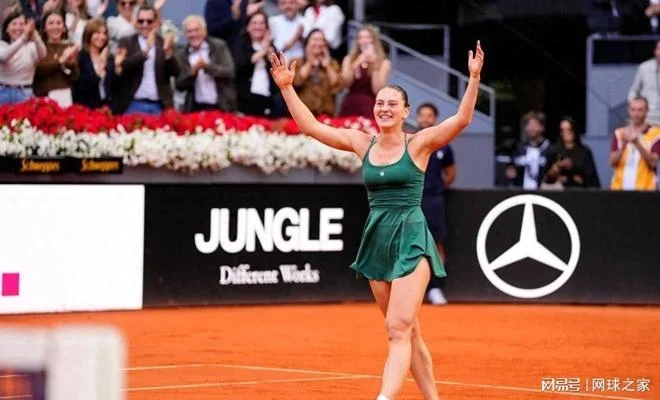
After the Madrid 1000 tournament concluded, fans and online commentators identified three major winners and three major losers from the women’s singles event.
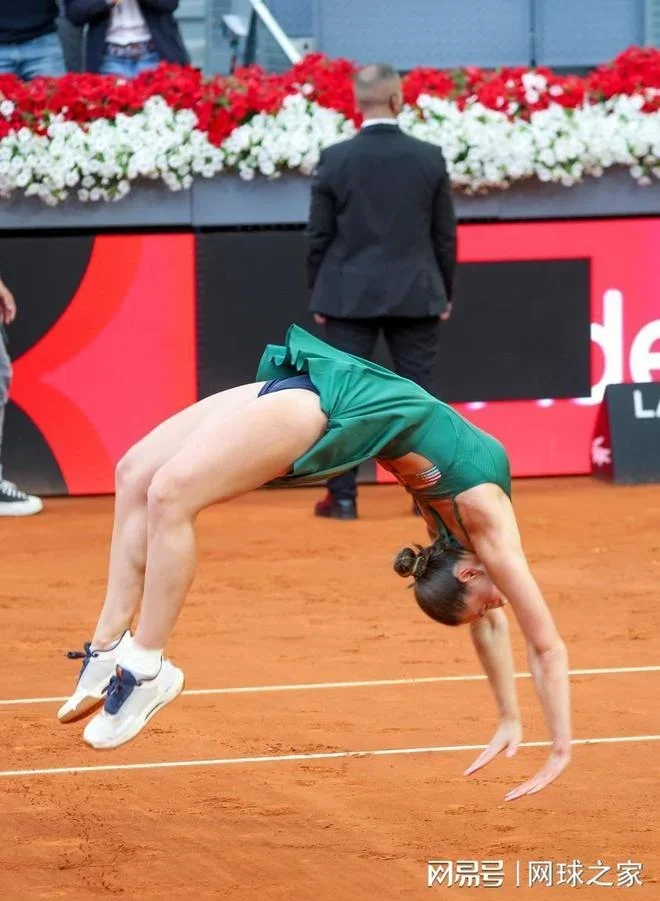
Marta Kostyuk emerged as the biggest winner of this WTA 1000 event, thanks to her victory over Mirra Andreeva in the final and her impressive backflip celebration that captured everyone’s hearts. Before the Madrid tournament, the Ukrainian was seeded 26th and had the 11th-best odds to win the title, making her nearly invisible. However, Kostyuk unleashed remarkable energy in Madrid, defeating the top favorite Andreeva to become only the third Ukrainian woman to reach a 1000-level final and the second to win such a prestigious title, following Elina Svitolina’s footsteps.
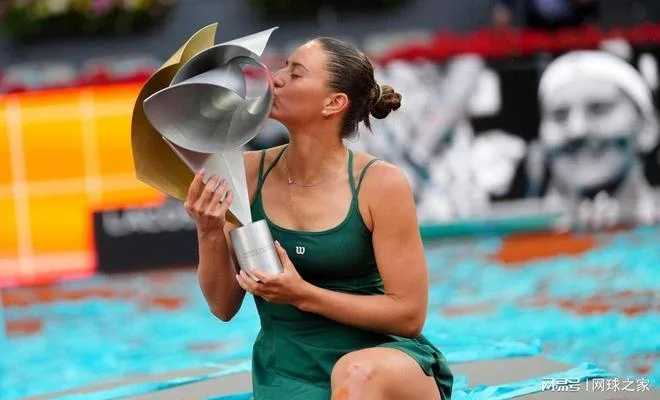
As the biggest winner, Kostyuk not only lifted the championship trophy but also pocketed a prize of €1,007,165, equivalent to over 8 million Chinese yuan. She earned 1,000 ranking points, propelling her to world No. 15. Interestingly, fans humorously described Kostyuk’s strategy against Andreeva as “tailoring the game to the opponent,” meaning the Ukrainian aggressively crowded the baseline when Andreeva’s first serve was off, forcing the Russian’s first-serve percentage below 50%. This tactic helped Kostyuk, a first-time 1000 finalist, claim a title that many players might never achieve in their careers.
Some may ask: does Andreeva, who cried after her loss, count as a loser? Absolutely not. Setting aside other factors, the Russian teenager became the first junior player to reach three finals at this level since the WTA 1000 series began in 2009—a feat her supporters will celebrate for a long time. While the runner-up plate isn’t as shiny as the champion’s trophy, it’s still a solid result, making Andreeva the second winner in Madrid’s women’s singles this year. Add to that her appearance in the doubles final, and her achievements are enviable.
The third winner is something of a miracle in this year’s Madrid women’s draw: Austria’s Anastasia Potapova. Potapova was initially out of the main draw and ready to pack her bags, but American star Madison Keys’s unexpected withdrawal handed the sweet-smiling Austrian a massive stroke of luck. After defeating Chinese player Zhang Shuai, Potapova played like a warrior possessed, knocking out former French Open champion Jelena Ostapenko, new Australian Open champion Elena Rybakina, and former world No. 1 Karolina Pliskova. Although she eventually lost to Kostyuk, a lucky loser from qualifying reaching the semifinals of a WTA 1000 is nothing short of extraordinary. If anyone says Potapova isn’t a winner, her supporters would surely argue.
While the winners left Madrid with minimal regrets, the three losers bid farewell in ways that left many sighing. Aryna Sabalenka, named the biggest loser by fans, is a prime example. As the defending champion and top favorite, Sabalenka’s quarterfinal exit stunned everyone—not because she can’t lose, but because of how she lost. The world No. 1 squandered six match points, failing to convert any of them, leading some to say her elimination seemed fated.
Second on the losers list is Elena Rybakina, who exited in the round of 16. In her match against Potapova, the world No. 2 held every advantage. Many found it hard to accept Rybakina’s loss because her serve, usually her lethal weapon, produced only three aces, and she committed a staggering 58 unforced errors.
American Coco Gauff is the third loser. The defending runner-up in Madrid fell in the round of 16. After losing 650 points, her world No. 3 spot was overtaken by Iga Swiatek, making her exit arguably the most disappointing among the top four seeds.
