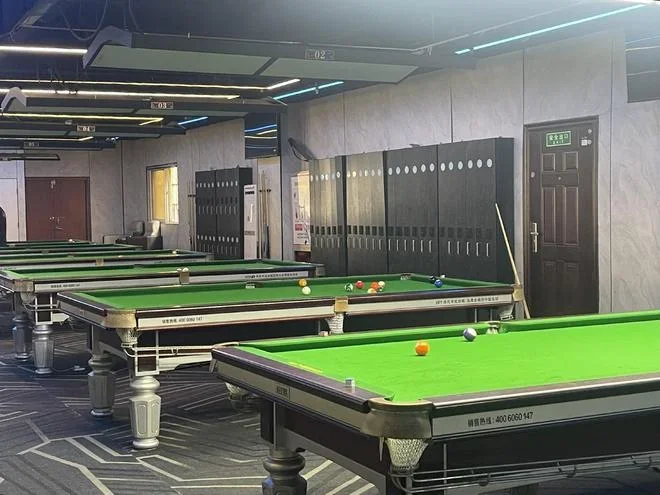

Late at night in a third-tier city in Shaanxi, the lights of a billiard hall still shine. Several young people gather around the table, each paying a few yuan per lost game to cover the table fee—this is their regular nightly activity. Meanwhile, in Shenzhen’s Nanshan district, a billiard tech company founded just three years ago has secured over 100 million yuan in funding, with a valuation surpassing 500 million yuan and more than 7,000 stores nationwide.
The contrast between small-town table fees and venture capital figures reflects a broader trend: as young people become more budget-conscious, a once-forgotten street entertainment is emerging as a window into modern consumer choices.
**Why Young People Pay for Billiards: 40 Yuan for an Afternoon**
Without prior planning, Haozi sends a group message to his friends at a barbecue stand: “Stick, 9 PM, same place.” It’s their unspoken code for a night at the billiard hall. He frequents a hall on the second floor of a nearly abandoned shopping mall, accessible only via a side elevator and a short fire escape. Such halls are being replicated or renovated across hundreds of low-tier cities nationwide.
The business is driven by data: 58% of billiard consumers have an annual income of 30,000 to 80,000 yuan, 59% are aged 18 to 35, and 64.7% play at night. Only 3.8% play in the morning. The logic is simple: billiards offers the cheapest social activity. The average price is about 20 yuan per hour, with a half-day cost under 40 yuan. Compared to a movie (40-80 yuan), a group dinner, or karaoke (over 100 yuan), billiards is the most affordable social entertainment. According to a survey, 69.2% choose billiards for leisure and 63.2% for social interaction—skill matters little; being with friends is key.

In county towns, this dynamic is even stronger. In Yushan County, Jiangxi, a major billiard table production base, there are over 70 billiard clubs and more than 5,000 tables. In early 2025, a village billiard tournament drew 40 villages, with matches held in public squares and prizes being local products. A resident observed that friends now prefer billiard halls over KTV, cutting costs from hundreds to tens of yuan while preserving social interaction—billiards’ turn-based, circle-standing layout actually facilitates conversation.
The underlying logic is clear: billiards is a “value-for-money social” activity in an era of rational consumption, offering cheap, extended entertainment for small groups.
**The Lightning War of Self-Service Billiards: Unmanned Mode Takes Over Small Towns**
Despite rising demand, billiards has long struggled with low efficiency. Most halls suffer from idle daytime hours and limited peak-time revenue. In Shangluo, Shaanxi, a hall with six tables serves about 20 people during peak hours, capping revenue at 30 yuan per table per hour. Rent is squeezed into the cheapest corners.
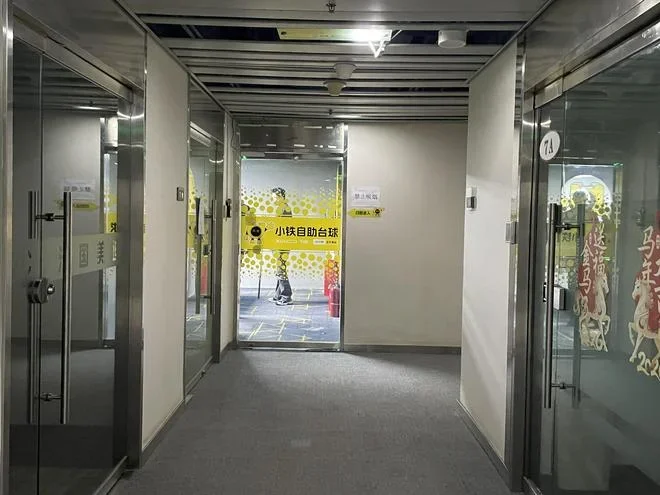
But in 2022, unmanned self-service billiard halls exploded. According to data, their number surged 2,030% year-on-year in 2022 and continued with 154.7% growth in 2024. The model replaces labor with technology, extends hours to 24/7, and maximizes location flexibility. A typical “Xiaotie” self-service hall covers about 100 square meters with 4-6 tables, costing under 300,000 yuan to set up. Customers book via app, scan to enter, and pay by the minute—no staff needed. Labor costs drop 70%, and the payback period is 18-22 months. Low rent in county towns further boosts profitability.
Capital quickly noticed. In 2023, Tencent led a 100 million yuan investment in Xiaotie. Over 60% of consumers are willing to try AI-assisted billiards, drawn by convenience and novelty.
Different brands take varied approaches: some focus on ultra-low cost and large scale, others on product differentiation, while high-end brands target premium experiences. A side business has also emerged: billiard assistant platforms like “Jingyu Billiard Assistant,” connecting young assistants with halls. These assistants offer coaching and company for solo players, adding a social dimension. One assistant, Tingting, 23, earns 50-60 yuan per hour, providing “less awkward companionship.”
**Three Driving Forces: Content, Manufacturing, and Events**
With consumers and a tech-driven supply side, the revival needed a spark—which came from short videos. On Douyin (TikTok China), the billiards topic has nearly 1 trillion views, with a daily average of 230 million views for professional matches and amateur bloopers. Algorithms democratize content, freeing billiards from its “middle-aged man’s pastime” label. One player, Zihan, went viral for her improbable shots, drawing 240,000 simultaneous viewers. Billiards content is no longer about textbook skills but about dramatic twists.
Chinese manufacturing also supports the industry. Yushan County produces 250,000 billiard table boards and 50,000 finished tables annually, exported to 70 countries. The domestic brand Xingpai has been the official table for the World Snooker Championship for 16