

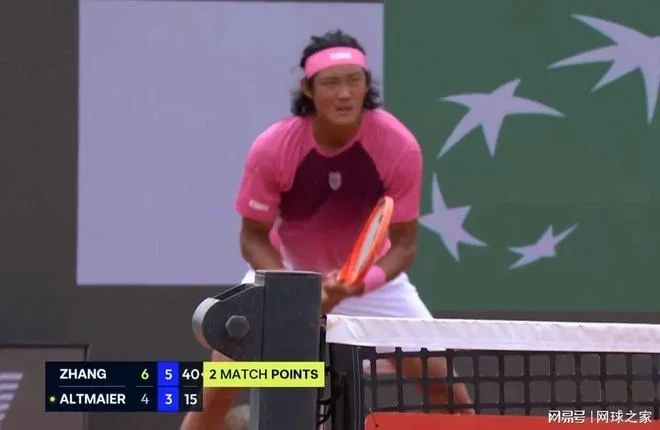
Zhang Zhizhen suffered a heartbreaking first-round exit at the Rome Masters, falling to German qualifier Daniel Altmaier in a three-set thriller. The Chinese No. 1 lost 6-4, 6-7(3), 4-6, despite holding two match points at 5-3, 40-15 in the second set. This defeat marked his third consecutive singles loss, dropping his live ranking to No. 227.
**How Did Altmaier Win?**
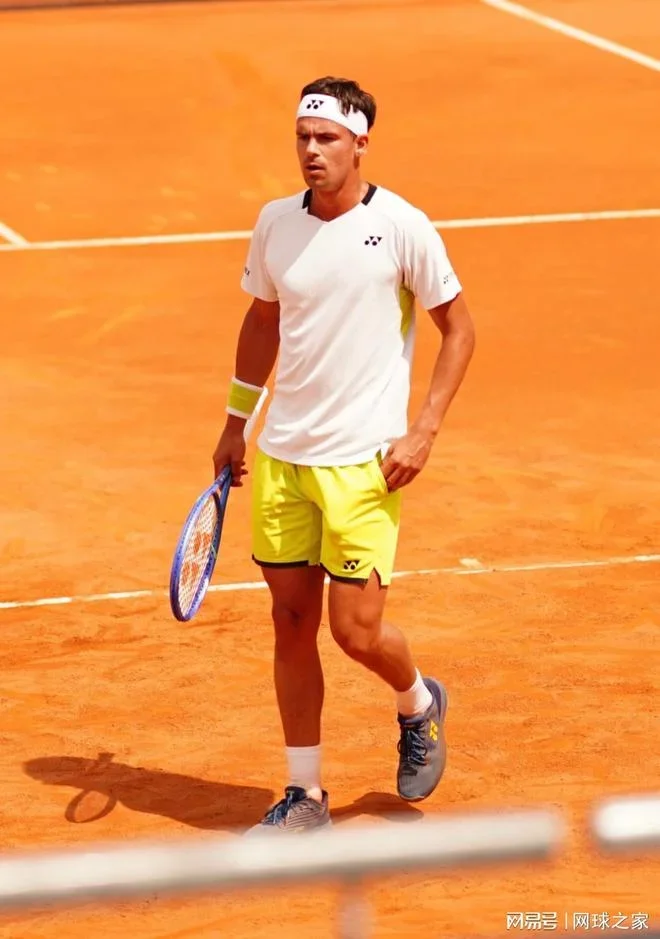
To be honest, Altmaier didn’t win this match because he played exceptionally well. In fact, during the second set, he looked visibly frustrated, even smashing his racket when facing Zhang’s onslaught. At one point, his body language suggested he believed the match was slipping away.
So how did he claw his way back from the brink?
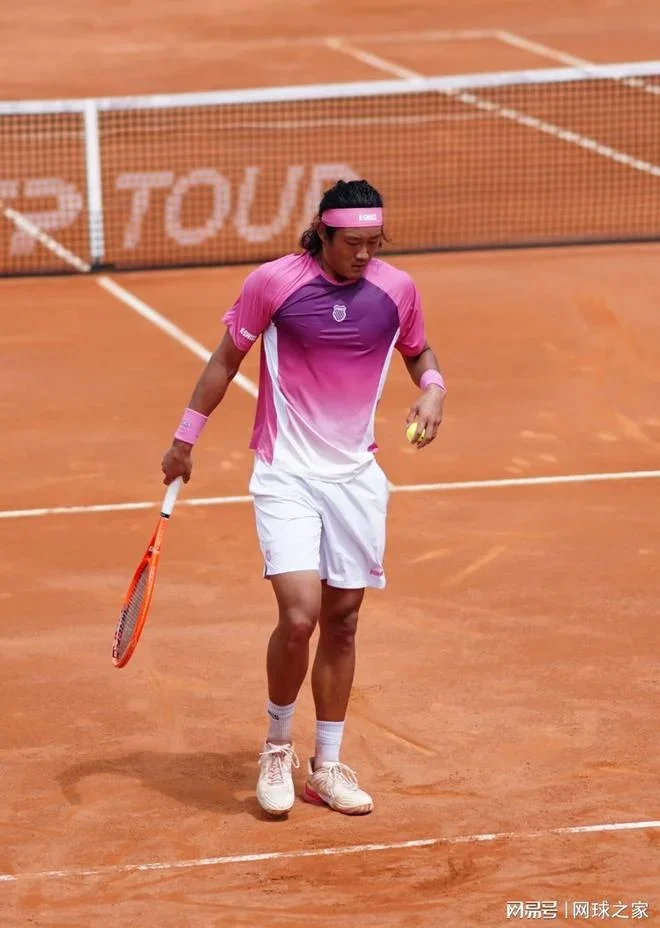
A deep dive into the match statistics reveals a harsh truth: Altmaier’s primary weapon was not technique but patience and attrition. He isn’t a particularly aggressive or powerful player—his serve lacks bite, and his baseline game isn’t exceptionally steady. But on clay, survival doesn’t depend on flashy shots. His strategy was simple and brutal: first, muddy the waters with relentless topspin rallies and grueling baseline exchanges; second, wait for his opponent to make a mistake.
In the opening set, Altmaier had no answer to Zhang’s aggressive, fast-paced play. However, as Zhang’s concentration wavered in the second set, Altmaier’s “muddying” tactic began to take effect.
He abandoned ambitious line changes, choosing instead to drag every point into slow, deep, center-court rallies. Late in the second set and during the tiebreak, while Zhang was already thinking about his next match against Alexander Zverev, Altmaier stayed calm. On match point, he defended stoutly, breaking Zhang’s resolve.
By the decider, the match was firmly in Altmaier’s hands. He didn’t need to hit many winners; he just needed to avoid errors, leaving all the mistakes to a tired, mentally fragile Zhang—and he bet correctly. This is classic bottom-tier clay-court survival. Stats may show he was on the defensive most of the time, but he won the crucial points—those gifted to him by Zhang.
**What Happened on Those Two Match Points?**
As of now, no official post-match press conference or mixed-zone interview with Zhang has been publicly released.
But replaying those two points in slow motion, at 5-3, 40-15 in the second set, Zhang was just two points away from his first singles win in nearly three weeks, and from breaking the curse of first-round exits in all three European clay warm-up events.
On the first match point, Zhang misjudged a wide serve and netted his return. On the second, he sent a sliced serve long. In an instant, both match points vanished. Zhang looked stunned. Then he lost his serve, and the tiebreak slipped away 3-7.
We can’t hear what he told himself in the locker room. But falling from the brink of victory is often more devastating than a straightforward loss. He didn’t lose to his opponent; he rejected victory’s offer himself.
To describe this match: Zhang’s fighting spirit is gone, and the soul of his tennis has vanished. At the most critical moment, he failed to apply pressure, and in his service game for the match, he couldn’t stop the bleeding. The second-set collapse left viewers confused and disappointed.
**Rome Wasn’t Built in a Day, But Zhang Dismantled It in Two Points**
“Rome wasn’t built in a day.” This old adage is a rule in professional tennis. Every player at this level, regardless of ranking, builds their career through thousands of repetitive swings, endless physical torture, and sleepless nights spent grinding on the Challenger and ATP tours.
The glory of reaching the Rome Masters quarterfinals in 2024 has faded. Now, the Zhang Zhizhen we see is a veteran battling at the low point of his career: sidelined by a shoulder injury for nearly a year, his ranking plummeted to 415, and he could only enter high-level events using a protected ranking. His current live ranking of 227 secured a Wimbledon qualifier spot, but that’s more a consolation from ranking rules. His German opponent is ranked 64th—a stark reminder of the gap that now defines Zhang’s reality.
For a 30-year-old who became a father last year, recovering full physical fitness and match rhythm against younger players is nearly impossible.
More worrying is the mental aspect. After years of extreme highs (explosive point gains) and lows (injury slumps), Zhang seems trapped in a terrible cycle: the more he craves victory, the more he fears mistakes; the closer he gets to match point, the less he knows how to play.
After this match, he earned 10 ranking points and €21,286 in prize money. His live ranking moved from 239 to 227.
Tennis is not a romantic poem about “friendship first, competition second.” It’s a giant, roaring money-eating machine, and winning is its only fuel. At
